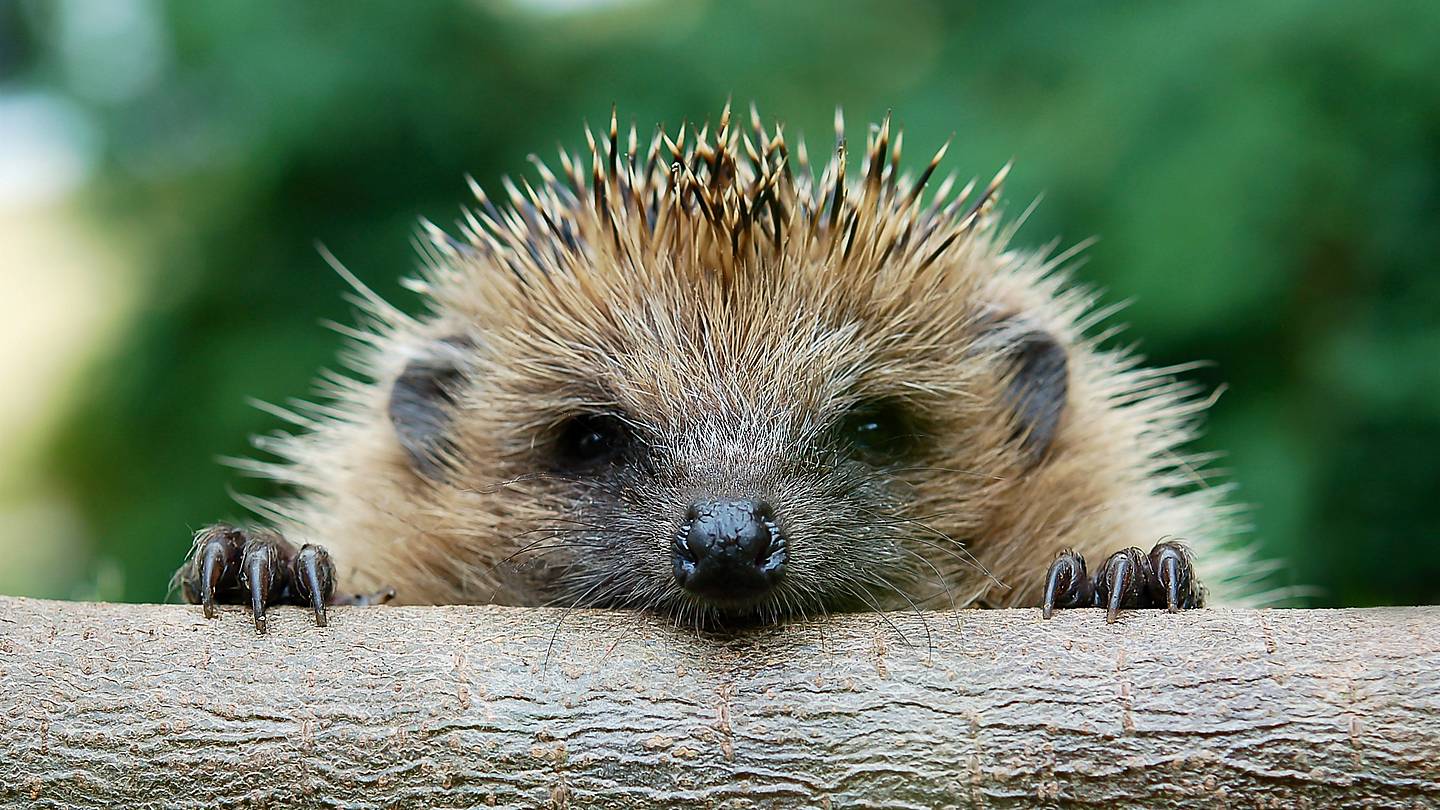
After cats , hedgehogs might be the internetâs favorite animal . But how much do you know about these spiky mammals other than how cute they look when getting a bath? Below, you can uncover fun hedgehog factsâincluding how many quills one actually has, and many more.
But it doesnât come up much, as hedgehogs are solitary creatures who usually come together only to mate.
The hedgie has gained some popularity as a petâbut some cities and states still qualify them as wild animals , which are not allowed to be kept domestically. They include California; Georgia; Hawaii; New York City; Omaha, Nebraska; and Washington, D.C. In some areas, like New Jersey, you need a permit in order to own one.
Those quills may raise or lower due to muscles along the animalâs back, and in response to threatening situations.
Australia also has no indigenous hedgehogs; the hedgies in New Zealand were introduced by humans. Not only that, but researchers at the National Museum of Natural History recently identified five new species of soft-furred hedgehogs; two of those species, Hylomys vorax and Hylomys macarong , are totally new to science (even though they were seen in museum collections previously).
And even their limited sight is best in the dark, as an adaption to their nocturnal lifestyle.
The inside of the quills are mostly hollow, with a series of complex air chambers that make them light but strong. That doesnât mean hedgehogs are too spiky to hold , though: When a hedgehog is in a relaxed state, the quills will lie evenly across your hands. So long as you donât pet them backwards and push against the sharp tips of their quills, you probably wonât end up being poked.
Their taste for destructive insects makes them a historically welcome presence in English gardens.
Which makes them one of only three mammals in Great Britain that hibernate (the other two being bats and dormice).
You can chalk part of this up to the animalsâ natural defense: those quills. When in a defensive state , a hedgehog can roll itself up into a tight little ball so that none of their soft parts are left exposed. That makes it hard for a snake to actually bite them (or survive eating one if they do, for that matter).
But this can also be attributed to a hedgehogâs diet, as they typically subsist on berries and insects, even poisonous bugs like scorpions . Theyâre also known to eat small snakes , usually biting at the tail until they paralyze the snake by severing its vertebrae. At least one species, the European hedgehog ( Erinaceus europaeus ), has the ability to resist snake venom .
Before the more adorable name came into use, the spiky mammals were called â urchins â throughout the Middle Ages, and thus inspired the name of the similarly spiky sea creatures. Baby hedgehogs are still called urchins.
Like many mammals, hedgehogs are hypolactasic , meaning they donât have the lactase enzyme necessary to metabolize the sugar in milk. While they might still devour milk and cheese, the undigested lactose can end up causing problems like gas, bloating, and even diarrhea for these small creatures.
But when German settlers got to America and found no hedgehogs, they turned to the similar-enough groundhog for their winter-weather predictions.
The McGillicuddy Serious Party was unsuccessful with their tiny candidate.
Events included sprints, hurdles, and floor exercises. There was a petition back in 2018 to bring back the games though. â The puppies get their recognition during the puppy bowl. The cats get their recognition from all their videos on YouTube. It â s time that hedgehogs had heroes to look up to, â organizers wrote as part of the call to action.
Itâs about a boy who was born half hedgehog. Not your style ? Try another Grimm tale, The Hare and The Hedgehog .
The purpose of this behavior is still unknown , but it does seem to be a response to strong odors (like dog urine and feces ). When a hedgehog is self-anointing, they typically lick and chew on things with these pungent smells, then cover their spines with a frothy saliva mixture. They may also rub their spines and fur with urine and excretions from their anal glands during the process.
Because the animals are very vulnerable to predators during and after the anointing (they generally become lethargic after), experts theorize that it serves an important function for them. Some have suggested that it might camouflage their smell to keep them safe from predators, while others believe the substances hedgehogs are coating the spines with might be irritating to predators that try to eat themâbut other theories abound, too.
A version of this article was originally published in 2016 and has been updated for 2024.