In 2008, an international team of scientists was trudging through the forests of Vietnamâs Bidoup-Nui Ba National Park when they found a frog they didnât recognize. Actually, no one recognized it, at least not formally. It was new to science and the species had never been described or named.
The scientists took care of that, dubbing the frog the âVampire Flying Frog,â Rhacophorus vampyrus , in 2010. A new species is usually pretty exciting, but the more interesting part of the story is maybe not the frog, but its tadpoles and the way the species got its unique name.Â
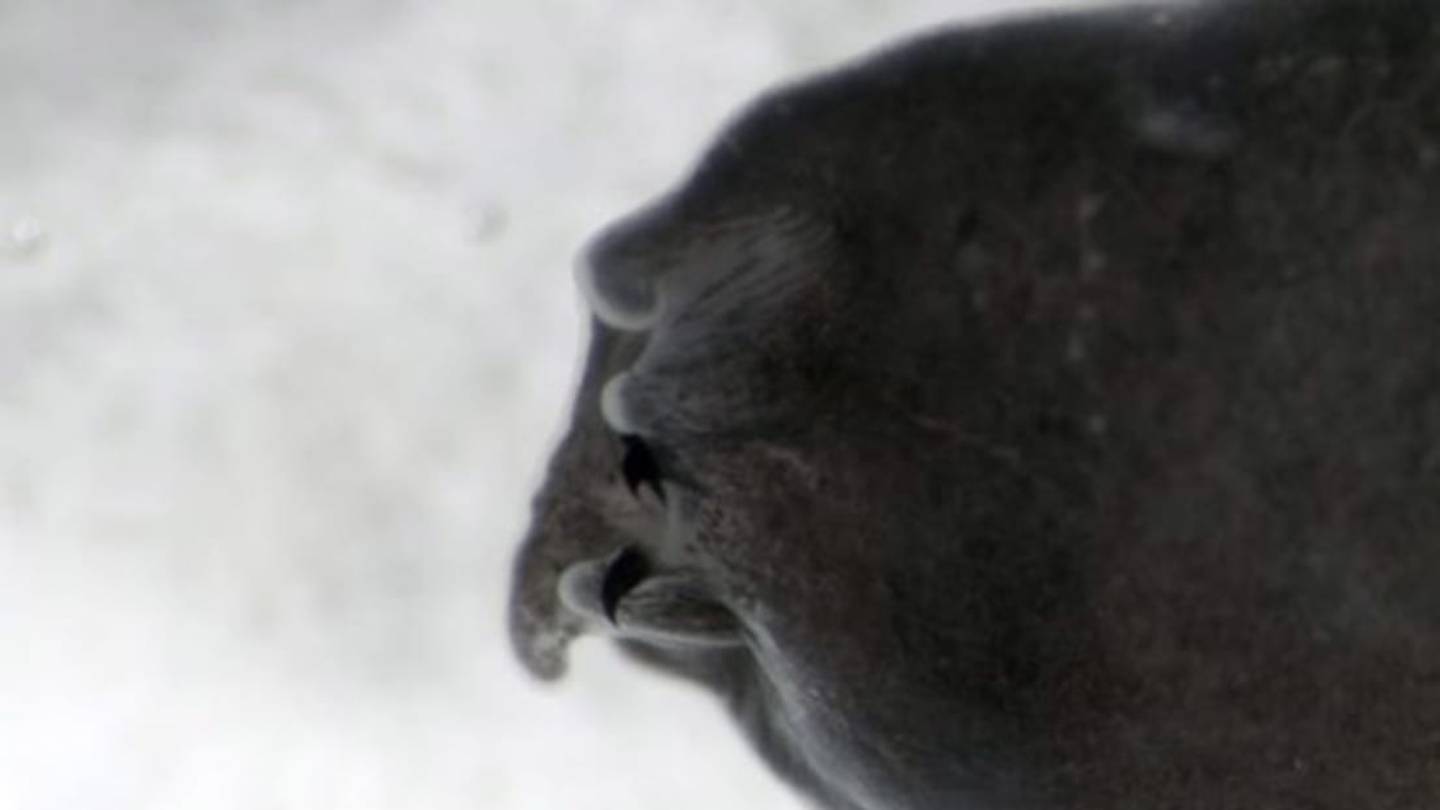
When the researchers discovered the frog, they also found a hole in a nearby tree. The hole was filled with water, and the water was filled with the frogâs tadpoles. They were tiny and black, and looked a little odd. When the scientists got a few back to the lab and put the tadpoles under a microscope, they realized that odd was an understatement.
The tadpolesâ mouthparts werenât like anything theyâd seen in other species. On each side of the mouth, there was a large, keratinized hook-like bit that stuck out, and then curved down. To the scientists, they looked like fangs.Â
Jodi Rowley , a herpetologist at the Australian Museum and lead author on the paper describing the species, is reasonably sure that the tadpoles arenât blood suckers. The strange âfangs,â the fact that Rhacophorus have webbing on their feet that allows them to glide through the air, and the fact that this new species is nocturnal, though, all make its common name pretty fitting.Â
Rowleyâs latest research on the frogs, published late last year, digs a little deeper into why the tadpoles have such impressive chompers. Most tadpoles have âoral discsâ that are sort of beak-like and built for scraping up algae or consuming small prey. Most other frogs also lay their eggs in a stream or pond. The Vampire Flying Frogs lay their eggs suspended in foam nests in the inside of water-filled tree holes, though, and the tadpolesâ fangs seem to be a way to deal with this unique home.Â
These holes arenât very big, and thereâs not much there to eat, so the momma frog returns to the nest occasionally and leaves her little ones a bunch of unfertilized eggs to eat. Rowley thinks that the weird mouthparts are used to snag the eggs, move them around and position the could-have-been-siblings to be swallowed whole.
While Rhacophorus vampyrus might have the monstrous name, weird dentition isnât exactly a novelty among frogs. A number of species sport tooth-like bone protrusions in their mouth that they use for nabbing fast-moving prey.Â
Primary image courtesy of the Australian Museum .
Loading recommendations... Please wait while we load personalized content recommendations