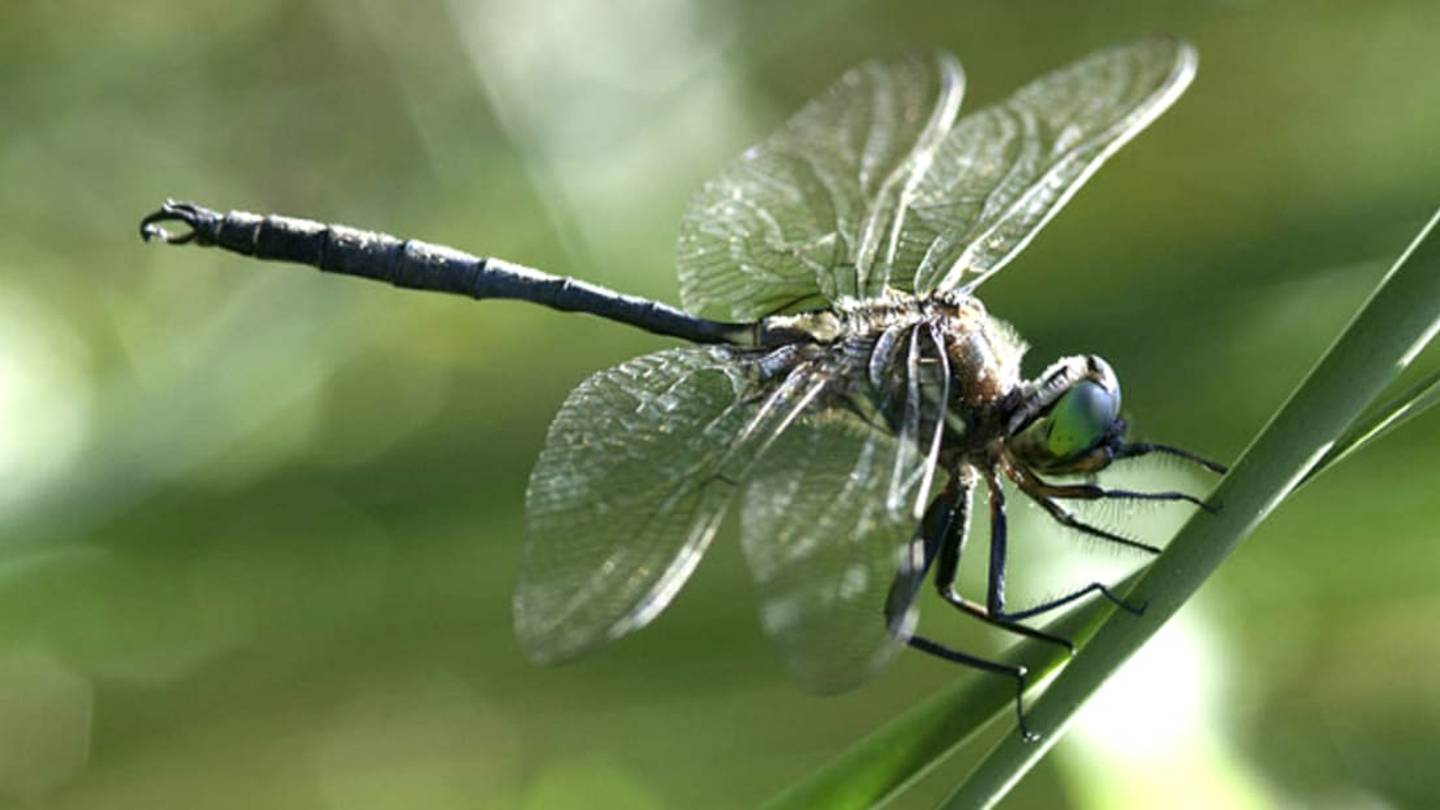
Some people talk about founding feminist colonies to escape the patriarchy. Dragonflies live it. Even within the same species, some animals occupy different habitats depending on sex or time of year. Thatâs certainly true of the federally endangered Hineâs emerald dragonfly ( Somatochlora hineana ).
Thought extinct for nearly 60 years, the Hineâs emerald dragonfly, often referred to as HED, is now known to live in Wisconsin, Michigan, Illinois, and Missouri. It lives in fens and lays eggs only in ground-fed water. At these cooler temperatures than where most dragonflies thrive, this slows HEDâs aging process. So for at least five years, its larvae stay in a freaky, angsty adolescent stage underwater before emerging as the adults we see in the air.
Ten years ago, when researchers surveyed places where dragonflies breed and lay eggs, they often counted significantly more males. Were females dying or just hiding elsewhere? A team of scientists investigated by looking for dragonflies in places they wouldnât expect. They found females in drier meadows and old farm fields . Although prey is scarcer in this landscape, so are harassing males. During HED mating encounters, males force females to the ground, scrape out the previous matesâ sperm, and copulate for more than an hour. No wonder the females hide.
The HED is endangered because the fens it calls home have largely been drained for agriculture or development. State agencies and conservation groups such as The Nature Conservancy are steadily restoring some fens to their original conditionânot specifically to help the dragonflies, but they benefit too.
Daniel Soluk, one of the scientists who first studied skewed sex ratios in dragonfly surveys, says that in addition to protecting meadows for females, engineers should consider how road design and speed limits impact wildlife mortality . Thatâs an increasingly popular concept for protecting large animals from death by vehicle, though itâs rarely discussed at the insect level. But the Hineâs emerald dragonfly might appreciate the consideration, because otherwise they might wind up splattered on a windshield . Soluk asks, âIf you build a road in a wetland area, are you going to be forcing females to cross this road to get to their land?âÂ
Loading recommendations... Please wait while we load personalized content recommendations