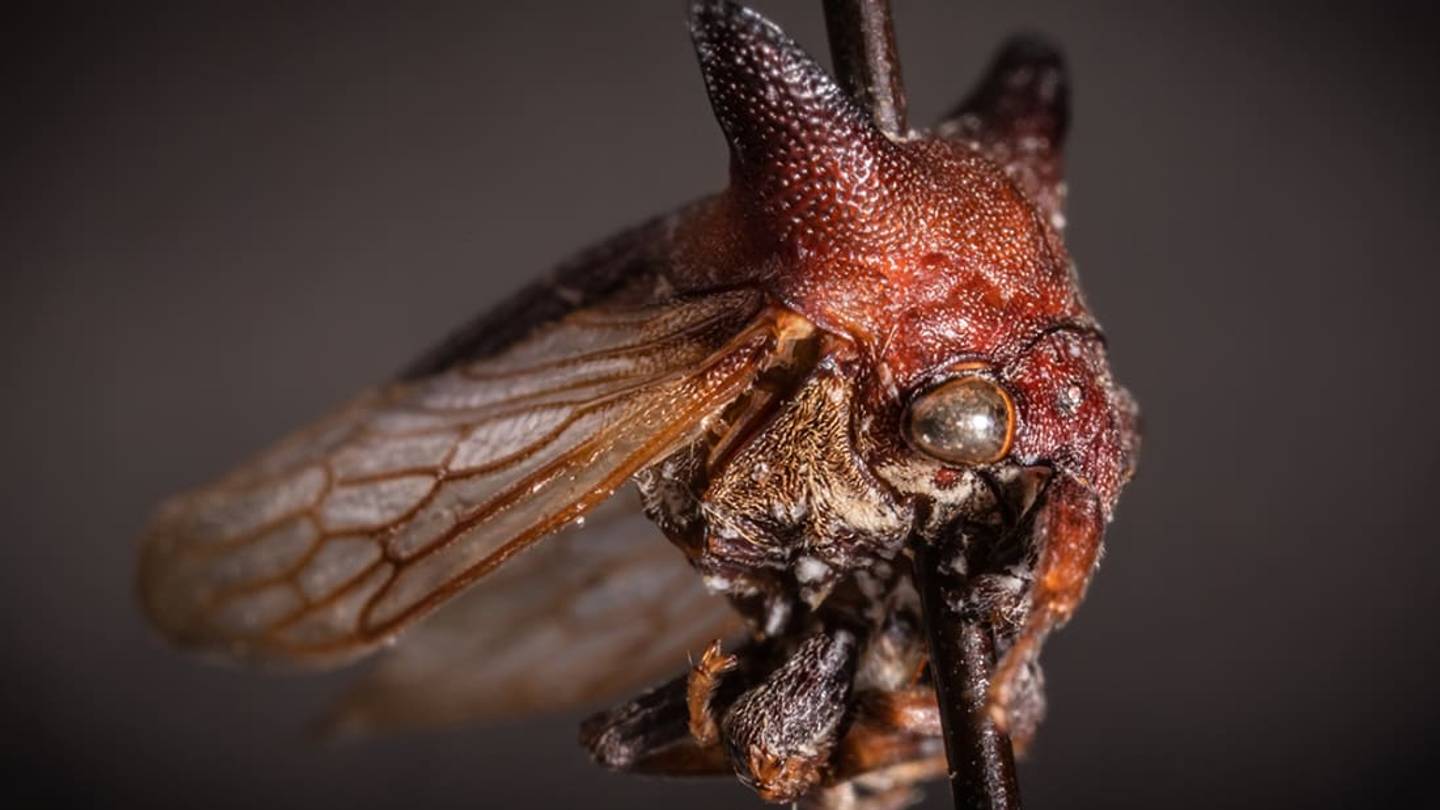
There are a million reasons why we should be paying more attention to treehoppers, says University of Illinois entomology grad student Brendan Morris. Thatâs why Morris, who uses they/them pronouns, chose to name a new genus and species after Lady Gagaâthey hoped the move would improve awareness of this unique but relatively unknown family of insects.
"Treehoppers include some of the most spectacularly beautiful and often quite bizarre bugs on the planet," Morris tells Mental Floss. "And they live almost everywhere that humans do, making them perfect candidates for a ladybug- or butterfly-level of appreciation." The findings were published in the journal Zootaxa .
The newly discovered treehopper species, now known as Kaikaia gaga , is one member of an incredibly diverse group of insects found on every continent except Antarctica. Treehoppers have long fascinated biologists who are intrigued by their unusual â helmets .â
âIt blows my mind that a group that is roughly 40 million years old has so much diversity of formâdiversity, I would argue, that we donât see in any other family of insects,â Morris told the University of Illinois News Bureau . âIf there is going to be a Lady Gaga bug, itâs going to be a treehopper, because theyâve got these crazy horns, they have this wacky fashion sense about them.â
K. gaga shares the distinctive horned thorax seen on many other treehoppers, but its unusual leg hairs make it clear itâs a separate species.
âAlso, the frontoclypeus, which is kind of like the face, was shaped totally different,â Morris told the University of Illinois. âAnd the genitalia looked more like treehoppers from the Caribbean or this Old World group, Beaufortianini .â
Lady Gaga has yet to respond to the news. Morris hopes she'll take it as a compliment, finding admiration for K. gaga 's "fierce, purplish face" and striking "'shoulder pad' horns."
Morris plans to search for living K. gaga treehoppers in an upcoming trip to Nicaragua, where the 30-year-old specimen they studied was originally found. Until then, they hope their discovery will bring renewed interest to these little monsters.
âTreehoppers are wacky, and I think that makes them especially suited to be âspokesbugsâ for the wide range of habitats they use,â Morris says.
[h/t University of Illinois News Bureau ]
Loading recommendations... Please wait while we load personalized content recommendations