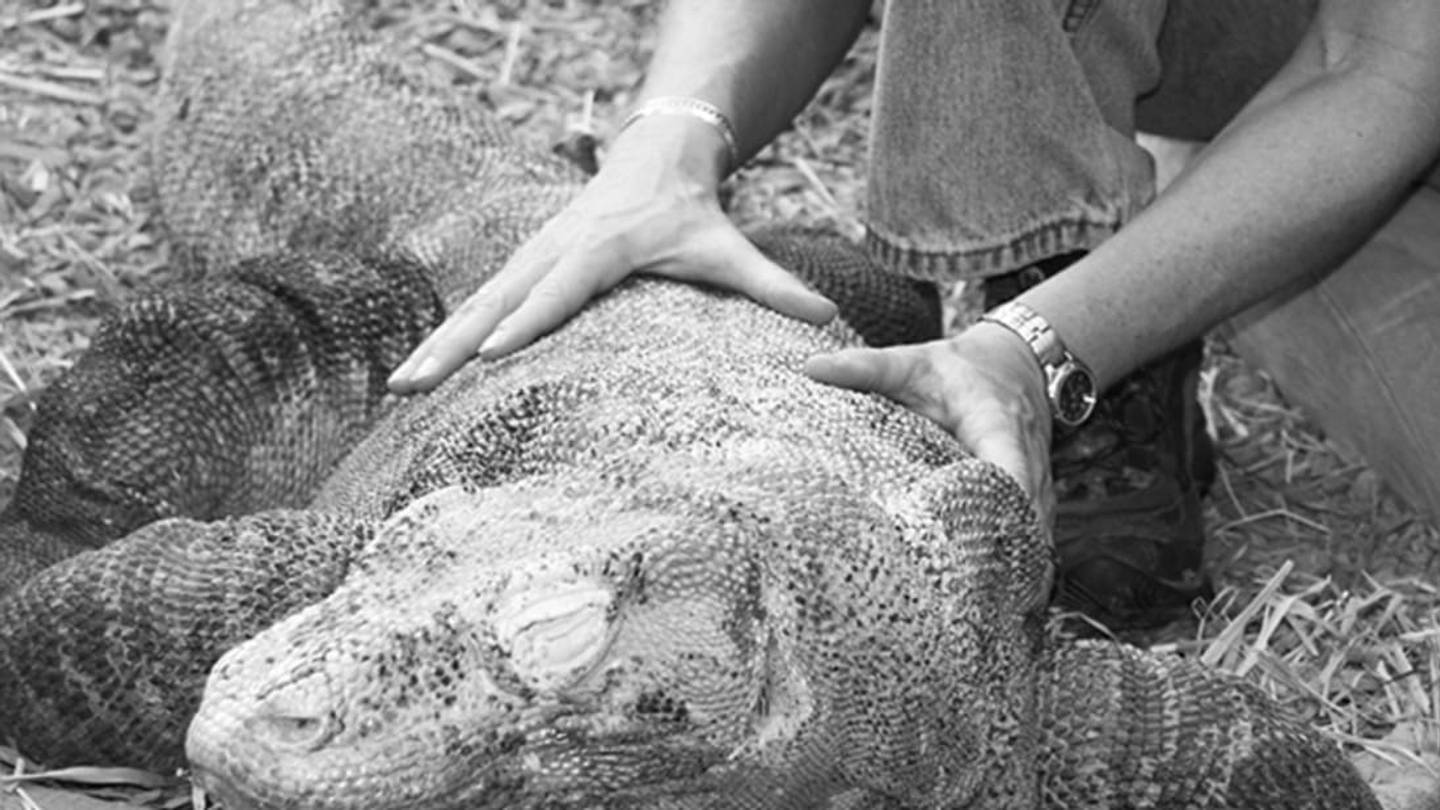
Komodo dragons are fierce predators, and not animals youâd want to get up close and personal with (if you need convincing, see the National Zooâs terse description of their hunting technique:Â âThe dragonâs basic strategy is simple: try to smash the quarry to the ground and tear it to piecesâ). Castor, a dragon living at the Denver Zoo, didnât exactly live up to his species' ferocious reputation, though.
In 2009, keepers cleaning Castorâs enclosure noticed that there were hardly any tail tracks in the dirt, indicating that he wasnât walking around much. They also saw him spending more time in his pool than he used to, moving so little that algae began growing on his scales. When they took x-rays of the 15-year-old lizard, the zooâs veterinary staff discovered that he had osteoarthritis in both hind legs.
The vets started Castor on a regimen of oral medicationsâadministered by hiding the pills inside smelts and rodents that the lizard ateâbut after his condition failed to improve, they decided to take a different approach and called in a specialist.
Tammy Wolfe is a physical therapist with an interesting resume. After two decades of working with people, she turned her attention to animals. Sheâs certified in canine rehabilitation and runs the The K9 Body Shop, a physical therapy clinic for dogs and cats. Sheâs also worked with zoos to treat exotic animals like camels, sea lions, flamingoes, coatimundis, antelopes and hawks. Castorâthe offspring of a Komodo dragon given to George H.W. Bush as a gift from the president of Indonesiaâwas her first venomous lizard patient, but she was enthusiastic to help him and began doing regular therapy sessions with him in 2013.
In a new paper on Castorâs treatment, Wolfe and the zooâs vets describe how they used a therapy technique developed by Wolfe to balance out the workload that the lizardâs different body parts handled when he moved. They started by performing gentle âmicromovementsâ on his spine and pelvis and then added regular massages to their routine, focusing on Castorâs right hindleg.
After a few weekly treatments, Castorâs keepers noted that he was spending less time in the pool and moving around his exhibit more. By the ninth week, he was running (the lizards can reach speeds of 13 mph), and a week later he could climb a 12-inch step in his enclosure, something he hadnât been able to do for several years.
While the therapy improved Castorâs mobility and quality of life for a while, his keepers noticed this July that he was having severe difficulty moving his back legs and made the decision to euthanize him. He was 21 years old.
âCastor was a remarkable animal and he will be missed,â Brian Aucone, the zooâs Vice President of Animal Care & Conservation, said in a statement. âAlthough this is never an easy decision, it was the right one. Weâll all miss him very much, but weâre glad he lived such a long, happy life here at the zoo. It was just his time.â
Loading recommendations... Please wait while we load personalized content recommendations